
- Why Safety Signs in Lifts Matter?
- What exactly does Safety Sign Indicate?
- This Sign Shows When a Lift Is Safe to Use - How to Identify
- The Legal demand Behind the Safety Sign
- Why Passengers Should Pay Attention?
- What Happens If the Sign Is Missing?
- The part of Technology in Lift Safety
- Real- Life Instances
- Tips for Building Owners and directors
- Final Words
When you step into a lift, the first thing you presumably notice is the bottom number or the buttons that will take you up and down. But have you ever stopped to suppose about what really ensures your safety inside that lift? The verity is, this sign shows when a lift is safe to use — and getting it could save lives. Whether you live in an apartment structure, work in a marketable office, or visit a shopping boardwalk, lifts are a diurnal part of ultramodern life. Yet, not everyone pays attention to the small but pivotal details that confirm a lift is actually safe.
In this post, we’ll take a deep dive into what this sign means, why it’s important, how to identify it, and the part it plays in keeping millions of people safe every day.
Why Safety Signs in Lifts Matter?
Imagine rushing late for work, stepping into an elevator that looks fine on the outside, but suddenly it pulls, shakes, or worse stops between bottoms. That kind of agony script is rare, but it can be if lifts are n’t duly audited and certified. That’s why this sign shows when a lift is safe to use is n’t just a casual notice but a fairly needed assurance of safety.
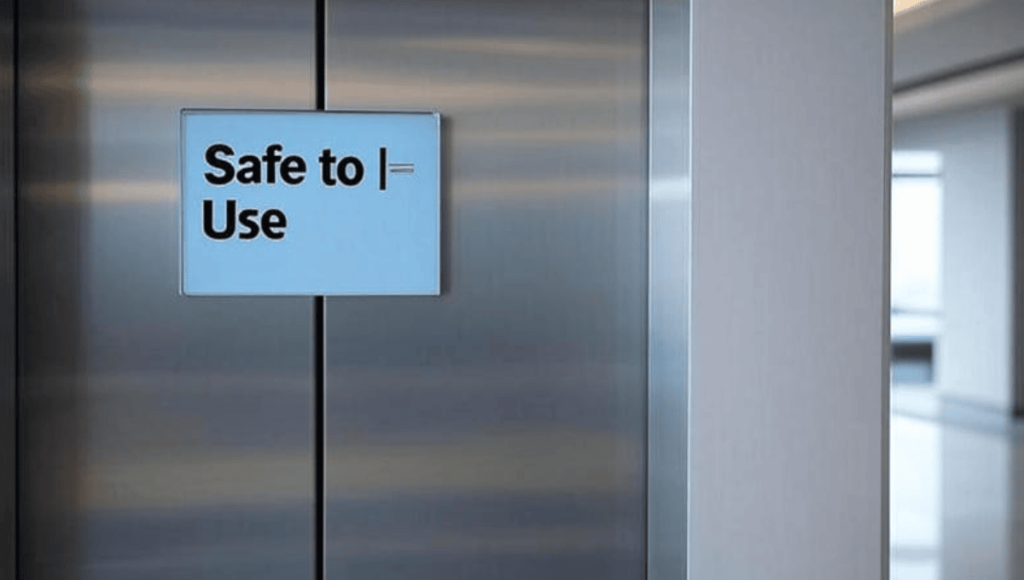
Lifts are heavy- duty machines that carry hundreds, occasionally thousands, of people every day. With so important wear and tear and gash, they must be maintained regularly. Safety signs and instruments displayed outside or near the lift assure passengers that the elevator has passed examination and is performing according to strict safety norms.
What exactly does Safety Sign Indicate?
When you see that sanctioned notice, it’s not just a piece of paper on the wall, it’s evidence that experts have tested and approved the lift. Generally, the sign includes details similar as
- The lift’s enrollment number
- The maximum weight capacity
- The date of the last examination
- The name of the examining authority or mastermind
- The validity period of the instrument
In other words, this sign shows when a lift is safe to use because it tells you that the lift has met all specialized conditions, and it can handle passengers without posing a peril.
This Sign Shows When a Lift Is Safe to Use – How to Identify
So, where do you actually find this sign? Most of the time, you’ll notice it inside the lift cabin, generally near the control panel or above the door. Some structures also display it outside the lift, near the entrance, so people can see it before stepping in.
Then are some suggestions that you’ve set up the right sign
- It easily mentions “ Lift Safety Certificate ” or commodity analogous.
- It has sanctioned prints or autographs.
- It displays dates, especially the last examination and the coming due examination.
- It specifies cargo limits( like “ Maximum 8 Persons or 544 kg ”).
Still, you can be confident that this sign shows when a lift is safe to use and that the lift is operating within safety morals, If you see all these details.
The Legal demand Behind the Safety Sign
Did you know that lift safety is governed by strict laws in utmost countries? For illustration, in India, every lift installed in a domestic or marketable structure must misbehave with the rules laid down by the State Lift Act. analogous regulations live in the UK, US, and other regions.
Authorities dictate periodic examinations, frequently formerly a time, to ensure the lift remains safe. Only after passing this examination does the lift admit a safety instrument. Without this sign, the lift should n’t be in operation. In fact, structure possessors can face penalties if they allow people to use a lift that has n’t been certified.
So when you step inside an elevator and spot that notice, flash back this sign shows when a lift is safe to use because it’s backed by law and expert evaluation.
Why Passengers Should Pay Attention?
You may wonder, “ Why should I bother checking the sign? Is n’t it the structure operation’s job? ” While that’s incompletely true, being an apprehensive passenger adds a redundant subcaste of security.
For illustration, if you notice that the instrument has expired, it’s worth reporting it to the structure’s operation or conservation platoon. That way, you help implicit accidents not just for yourself but for everyone using the lift.
Flash back, elevators are machines, and like any other machine, they can fail without proper care. Keeping an eye on the sign is a small but important step toward particular safety.
What Happens If the Sign Is Missing?
Still, it’s a red flag, If you enter a lift and do n’t see any safety notice. It may mean
- The lift has n’t been audited lately.
- The instrument has expired.
- The structure operation is neglecting safety rules.
In similar cases, it’s good to avoid using the lift until the matter is resolved. You can also file a complaint with the original external authority or safety board. After all, this sign shows when a lift is safe to use, and without it, you simply ca n’t be sure.
The part of Technology in Lift Safety
ultramodern technology is making lift safety indeed more dependable. Numerous new elevators now come equipped with smart detectors, real- time monitoring systems, and automatic reporting to conservation brigades. These advancements reduce the threat of accidents and ensure examinations are carried out on time.
But indeed with all these upgrades, the physical sign and instrument remain essential. Technology can warn masterminds, but the sign communicates directly to passengers that the lift has passed sanctioned checks. That’s why this sign shows when a lift is safe to use still holds its significance, indeed in the digital age.
Real- Life Instances
suppose about a busy metro station where thousands of commuters depend on lifts every day.However, the threat of accidents would shoot , If the lifts were n’t regularly audited and certified.
In 2019, a shopping boardwalk in India faced legal action when its lift safety instruments were set up expired. Authorities shut down the lifts until proper examinations were carried out. This incident reminded the public that safety signs are n’t just formalities, they’re lifesaving documents.
These examples accentuate the fact that this sign shows when a lift is safe to use is n’t just an expression it’s a standard that protects lives.
Tips for Building Owners and directors
Still, then’s what you must do
If you manage a structure with lifts.
Schedule examinations on time.
- Display the instrument easily inside or outside the lift.
- Keep a record of once examinations.
- Educate residents or workers about the significance of checking the sign.
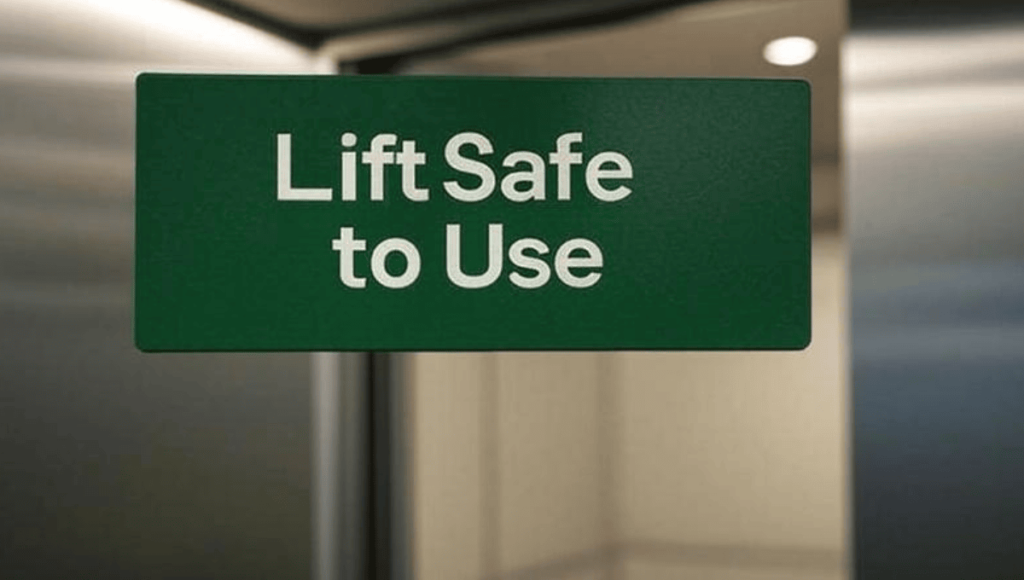
When these ways are followed constantly, passengers can trust that this sign shows when a lift is safe to use is further than just words; it’s a pledge of safety.
Final Words
The coming time you step into a lift, pause for an alternate and look around. That little notice put away near the buttons or on the wall is n’t just paperwork, it’s your assurance that the lift has been tested, approved, and declared safe. Flash back, this sign shows when a lift is safe to use, and admitting it can help you make safer choices in your everyday life.
So, whether you’re in an office, a domestic palace, or a shopping boardwalk, make it a habit to check the sign before you trust the machine. After all, your safety is worth that one quick regard.
